
Best UK Casinos Not on GamStop
Gibt Es Online Roulette Mit Einem 500 Bonus 2026
juillet 3, 2026Ο Απόλυτος Οδηγός για το Xena Casino Μάθετε Όλα Όσα Χρειάζεστε
juillet 3, 2026As the online gambling landscape continues to evolve, many players in the UK are seeking alternatives to traditional casinos, particularly those that are not part of the GAMSTOP self-exclusion scheme. Non-GamStop casinos offer players the opportunity to engage in gaming without the restrictions imposed by GAMSTOP, which can be beneficial for those looking to explore more options. However, it’s essential to approach these casinos with caution and ensure they meet specific criteria for safety and trustworthiness. This article will provide a comprehensive comparison of the best non-GamStop casinos, highlighting what to look for when choosing a site, as well as discussing game variety, bonuses, and responsible gambling practices.
Top 6 non-GamStop casinos
How to compare non-GamStop casinos: checkable criteria versus personal preferences
When evaluating non-GamStop casinos, players should differentiate between checkable criteria and personal preferences. Checkable criteria include licensing transparency, legal availability, security measures, clear terms and conditions, withdrawal processes, verification requirements, and player protections. These elements are crucial for ensuring a safe gaming experience. Personal preferences, on the other hand, encompass factors such as game selection, user interface, compatibility with devices, and payment methods. By balancing these aspects, players can make informed decisions about which casinos to engage with.
For further context, see best casinos not on Gamestop. Check current terms, licensing claims and player protections before considering any site.
UKGC regulation, GAMSTOP, licensing and security
The UK Gambling Commission (UKGC) regulates gambling activities in the UK, ensuring that operators adhere to strict standards for fairness and security. While non-GamStop casinos may not be under UKGC oversight, it is vital for players to verify the licensing of these sites. An offshore licence does not equate to the same level of protection as UKGC regulation. Additionally, understanding GAMSTOP is essential; it is a self-exclusion scheme designed to help individuals manage their gambling habits. Players who have registered with GAMSTOP should refrain from using non-GamStop casinos, as this could undermine their self-exclusion efforts.
Table games and roulette: RTP and house edge explained
Table games, including roulette, are popular in non-GamStop casinos. Understanding Return to Player (RTP) and house edge is crucial for players. RTP is a theoretical long-term indicator of how much a game pays back to players over time, while the house edge represents the casino’s advantage. For example, a roulette game with a 97% RTP means players can expect to receive £97 back for every £100 wagered in the long run. However, these figures are not guarantees for individual sessions, and players should be aware of the inherent risks in gambling.
Slots: RTP and volatility explained
Slots are a staple in any casino, and non-GamStop sites are no exception. When choosing slots, players should consider both RTP and volatility. RTP indicates the expected return over time, while volatility describes the risk associated with a slot game. High volatility slots may offer larger payouts but less frequently, whereas low volatility slots provide smaller, more consistent wins. Understanding these concepts can help players select games that align with their risk tolerance and gaming preferences.

Casino bonuses and their conditions
Bonuses are a significant attraction for players at non-GamStop casinos. However, it is essential to read and understand the terms and conditions attached to these offers. Common types of bonuses include welcome bonuses, free spins, and loyalty rewards. Each bonus will have specific wagering requirements, which dictate how many times players must wager the bonus amount before they can withdraw any winnings. Additionally, players should be aware of any restrictions on eligible games and expiry dates for bonuses.
Payments, withdrawals and KYC verification
When engaging with non-GamStop casinos, players should consider the payment methods available for deposits and withdrawals. Reputable casinos offer a variety of options, including credit and debit cards, e-wallets, and bank transfers. Additionally, players should be prepared for Know Your Customer (KYC) verification processes, which are standard in the industry to prevent fraud and ensure responsible gambling. This may involve providing identification documents and proof of address, which can take time to process.
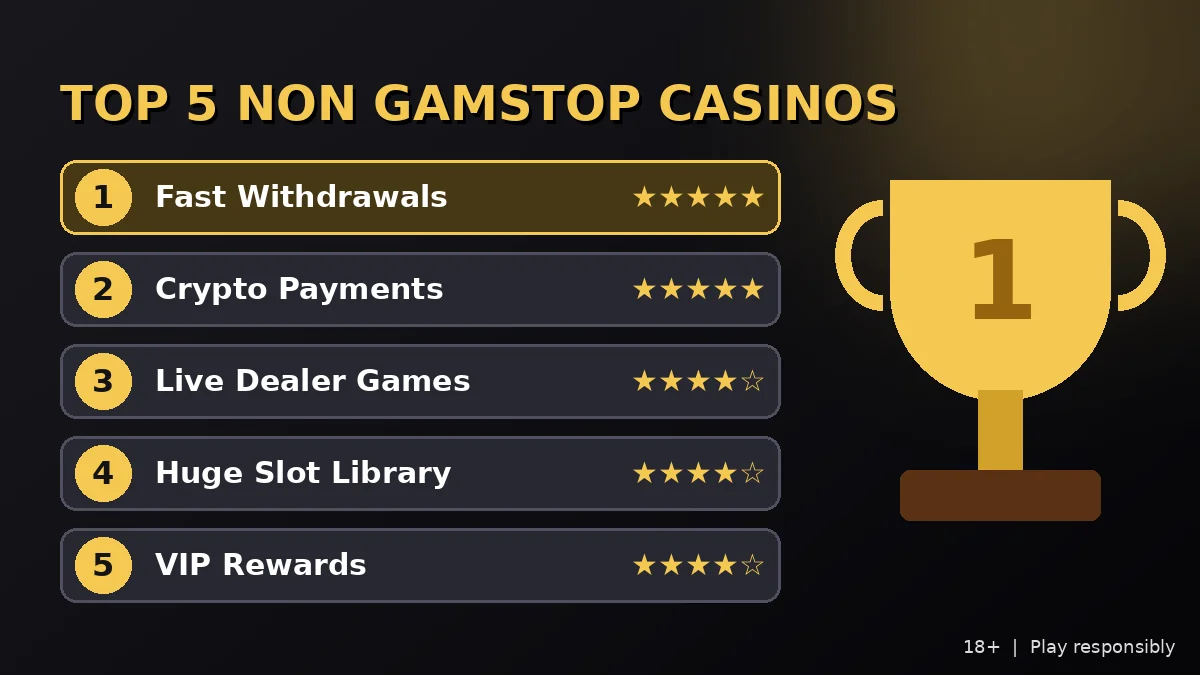
Common mistakes when choosing a casino
Players often make several mistakes when selecting a non-GamStop casino. One common error is failing to check the licensing and regulatory status of the site. Additionally, players may overlook the importance of reading the terms and conditions associated with bonuses and promotions. Another mistake is not considering the casino’s payment options and withdrawal times, which can lead to frustration later. By being aware of these pitfalls, players can make more informed choices.
Safer gambling
Responsible gambling is crucial for anyone engaging in online gaming. Players should set limits on their spending and time spent playing to ensure that gambling remains a form of entertainment rather than a source of income. It is advisable to avoid using borrowed money or funds needed for essential expenses. If gambling stops being enjoyable, players should take breaks and seek help if necessary. There are numerous resources available for individuals who may be struggling with gambling-related issues.
A practical conclusion
In conclusion, while non-GamStop casinos can provide additional gaming options for players, it is essential to approach them with caution. Understanding the differences between checkable criteria and personal preferences can help players make informed decisions. Always verify licensing, read terms and conditions, and practice responsible gambling. For those looking for options, the best UK casinos not on Gamstop can be a starting point in exploring the diverse offerings available in the online gambling landscape.
